
Article body copy
When Arvid Pardo, a Maltese diplomat, took the floor at the United Nations General Assembly in New York in 1967 and began speaking at length on international law, the room was sparsely populated. Pardo was undeterred.
The deep, dark ocean, he said, is the womb of life. “We still bear in our bodies—in our blood, in the salty bitterness of our tears—the marks of this remote past.” With technology fast progressing, “man, the present dominator of the emerged earth, is now returning to the ocean depths. His penetration of the deep could mark the beginning of the end for man, and indeed for life as we know it on this Earth; it could also be a unique opportunity to lay solid foundations for a peaceful and increasingly prosperous future for all peoples.”
Pardo argued that the deep seafloor falls outside the territory of any state. As humanity raced to exploit the “immeasurable wealth” already known to be hiding there, Pardo said that wealth should be viewed as the common heritage of humankind.
At a time when countries around the world were grappling with the Cold War along with the lingering consequences of colonization and exploitative resource extraction, Pardo’s treatise struck a nerve. After all, who should have access to the deep? Who should benefit from its wealth?
His speech—later characterized by historians as a “you should have been there” moment—set the stage for nearly a decade of negotiations. Eventually, those discussions resulted in the United Nations Convention on the Law of the Sea (UNCLOS) containing this language: that any industrial activity on the international seafloor must “be carried out for the benefit of mankind as a whole.”
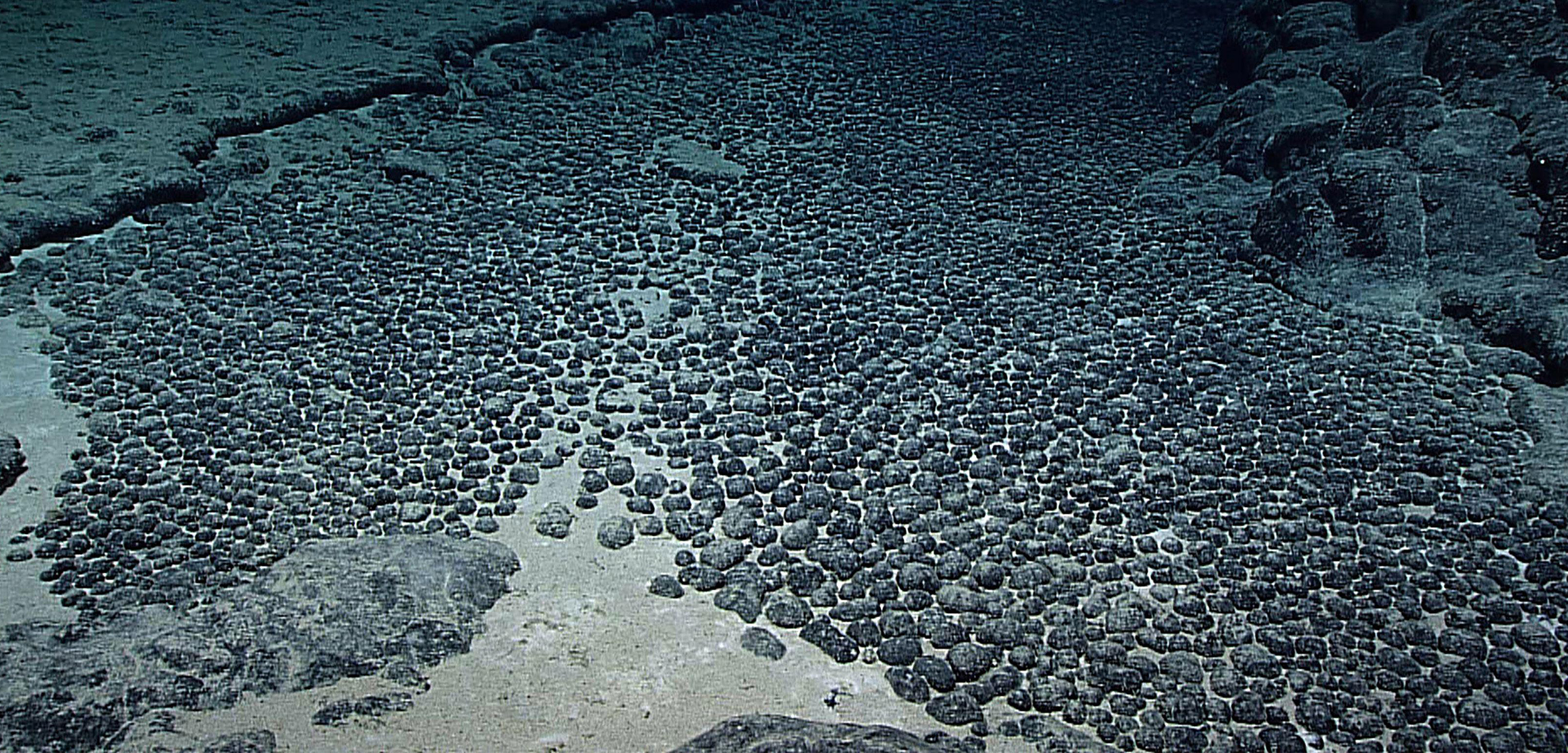
Today, with deep-sea mining companies closing in on mineral-rich rocks called polymetallic nodules, policymakers at the International Seabed Authority (ISA)—the intergovernmental body that governs activities on the seafloor in international waters—are still grappling with the challenge passed down by Pardo. If the resources on the international seafloor are the common heritage of humankind, as UNCLOS states they are, then what, exactly, does that mean? With little to no precedent to rely on, and with the reality of deep-sea mining inching ever closer, the ISA and its member states are in the process of figuring out how to make deep-sea mining work for all of humanity.
At a practical level, this huge responsibility is in the hands of just 15 people—the state representatives who make up a working group at the ISA, uninspiringly called the Finance Committee. The Finance Committee meets in private, with limited public reporting of its deliberations. Observers have called for the Finance Committee to have greater transparency.
According to an ISA technical study, the Finance Committee is currently exploring two main options for sharing financial benefits. One involves distributing any leftover proceeds from deep-sea mining to world governments, with countries that have large populations and low incomes getting more money than smaller, wealthier ones.
Crucially, the money being disbursed would be what’s left after the mining company and its sponsoring state have made their profits, after the administrative costs of running the ISA have been accounted for, and after any compensation is paid out to countries negatively affected by mining.
In its own analyses, the ISA uses US $500-million as a benchmark for discussing how to equitably share benefits among nations. But one independent economic forecast estimates that the actual amount available for benefit sharing could fall between $14-million and $228-million each year. That study found that countries like India could receive about $1-million annually, while Pacific Island nations, such as Kiribati, might receive as little as $7,500.
The ISA’s second option to make deep-sea mining benefit all of humanity involves channeling the leftover proceeds into a fund that could be used to pay for scientific research and address the environmental harms caused by seabed mining.
The risk with this approach, says Aline Jaeckel, an expert in deep-sea mining regulations at the University of Wollongong in Australia, is ensuring the money genuinely benefits humanity, rather than being used to clean up the problems created by deep-sea mining itself.
But both approaches, says Jaeckel, miss the bigger picture. The deep sea is home to an incredible amount of life—much of which has yet to be discovered by scientists, let alone fully understood.
Recently, a treatment for brain cancer was sourced from microbes living on the ocean floor, while enzymes found in bacteria near hydrothermal vents were used to develop tests for COVID-19. Even polymetallic nodules—the very objects deep-sea miners covet—may play a role in oxygenating the deep ocean. Narrowly focusing on the financial benefits of deep-sea mining, says Jaeckel, misses what else the deep sea already provides, or could provide in the future.
The ISA’s approaches to interpreting the deep seafloor as the common heritage of humanity also fail to leave room for Indigenous rights to the deep sea. In some countries, terrestrial mining operations are required to financially benefit local Indigenous communities. But the benefit-sharing mechanisms currently under discussion at the ISA do not specifically account for the people who might be most directly affected by seabed mining, such as those from Pacific Island nations. Instead, it’s up to states to compensate people who might be particularly affected by mining.
Neil Craik, an expert in international environmental law at the University of Waterloo in Ontario, says that with so much uncertainty around the environmental consequences of seabed mining, and limited information on the economic benefits, “one of the big questions states must ask themselves is if [seabed mining] is worth it.”